Overview.
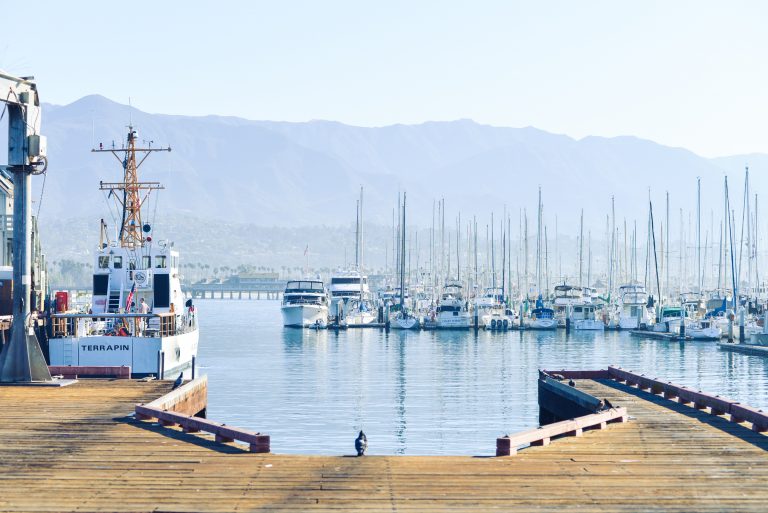
The inter-regional arena of the Indian Ocean has emerged as an important field of research in several different disciplines. While the case for integration had been strongly suggested by archaeological and historical scholarship since the early twentieth century, comparisons, connections, and contentions across the Indian Ocean in the colonial and contemporary periods have now featured prominently in the works of anthropologists, sociologists, political scientists, and economists. With the aim to advance this multidisciplinary research on the Indian Ocean, the annual conference of the Center for Global Asia in 2017 focuses on the study of ports and port cities as important sites for connections across the maritime space and with the relevant hinterland areas.
The study of seaport environments provides fertile ground for collaborative endeavor among different disciplines. Travels on the monsoon among countless connected ports around the Indian Ocean and western Pacific formed spaces of mobility connecting East Asia with Southeast, South and West Asia, from ancient times. Seaborne mobility by migrants, merchants, warriors, and cultural activists shaped all of Asia for many centuries before it brought Europeans and launched global modernity. Subsequently, modern industrial infrastructure — railways, steamships, and deep sea ports — privileged strategic coastal cities in a world of empires, and each new technology increased their prominence in the world of nations, making select port cities airline hubs and financial capitals.
The ports of the Indian Ocean thus inhabit environments at many levels of spatio-temporal scale: their natural and social ecologies are local; the archaeological remains provide evidence for maritime connections over long-distances, they are hubs for coastal regions of development; they are transcontinental innovators in the arts, architecture, cuisine, and technology, and laboratories for urban planning, and conduits of mobility. They also house vast populations and contain generations of invested wealth facing stormy winds and seas of global climate change. The panels at this three-day conference will address several of these topics and consider new ways to conceptualize the historical and contemporary connections across the Indian Ocean world.